ServicesRoll Off Dumpster Rental
Roll Off Dumpster Rental in Edgewater
We drop an open-top roll-off where your debris is, leave it for the rental period and haul it away when you're done. Before the truck leaves our yard, you have the size, weight allowance, rental days and any extra fees in writing.
What a Roll-Off Is and When It Fits
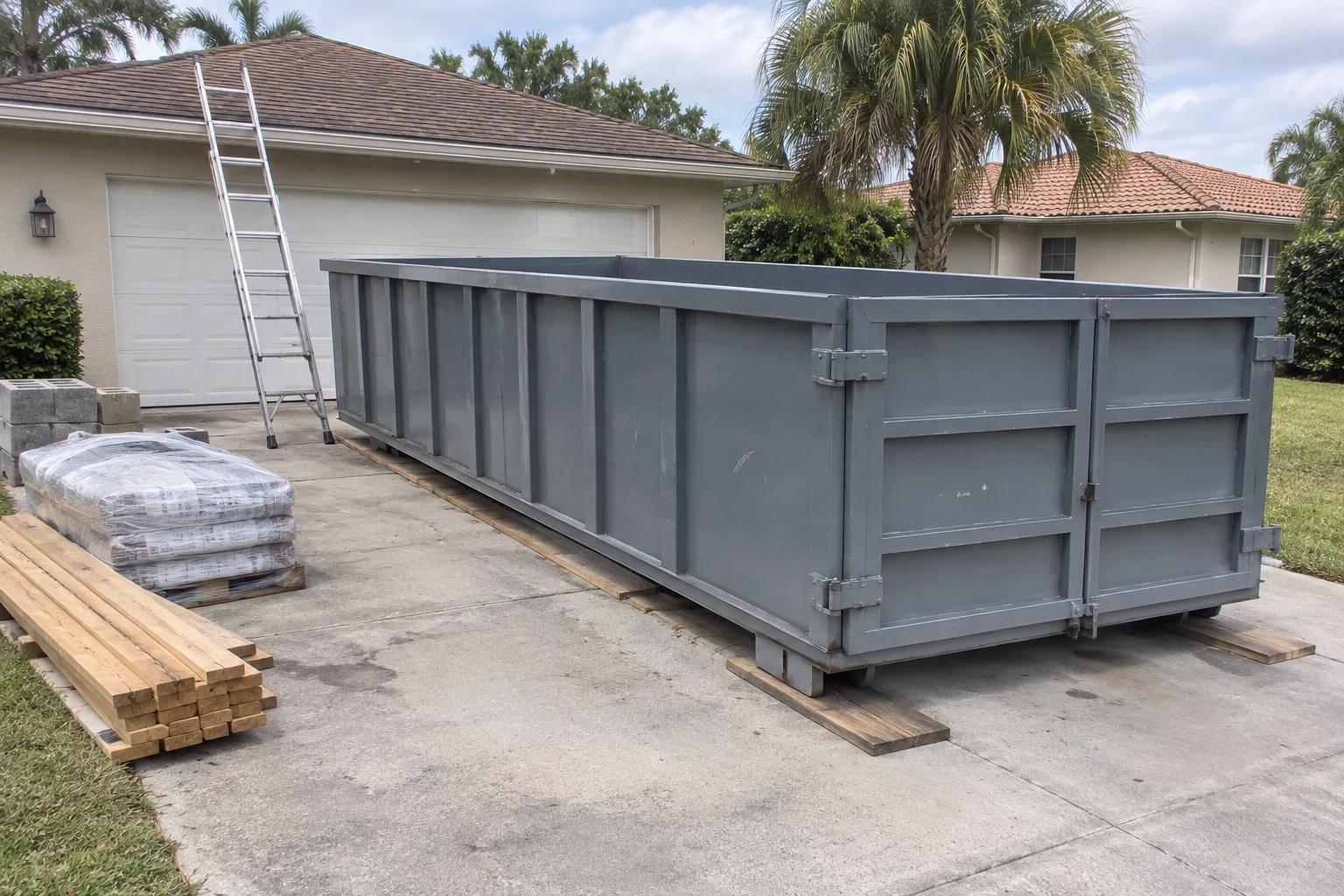
A roll-off is a steel open-top container that a hook-lift or cable truck slides off its frame onto the ground. It rests on two steel rails, so you can load it at your own pace for days instead of hours. Containers are measured in cubic yards, and the right yard size depends on both the volume and the weight of what you're throwing out.
Roll-offs suit work with a clear start and finish: emptying a garage or a relative's house, gutting a kitchen or bathroom, pulling up old flooring and drywall, clearing landscaping waste, or stripping a roof down to the deck. If your business needs trash pickup every week instead, our front load dumpster service is set up for that.
We put the scope in writing because most dumpster billing disputes come from three things nobody explained up front: tonnage over the allowance, extra days and banned items. All three are spelled out before you agree to anything.
What Your Rental Includes
Delivery and placement
We set the container where you mark it, as long as the truck has a straight approach and room overhead for the hoist to tilt. We'll ask about driveway length, gates and low branches when you call.
Boards under the rails
Steel rails concentrate a loaded container's weight on two narrow strips. We lay boards under them to spread that load and reduce scuffing on concrete driveways and pavers.
A written weight allowance
Your written terms list how many tons are included and the per-ton rate for anything over. Shingles, tile, concrete and wet soil are dense, so we size the allowance to the material you describe.
A set rental period
The number of days is written down, along with the daily rate if your project runs long. If you finish early, call and we'll schedule pickup sooner.
Haul away and disposal
We pick up the full container, take it to the appropriate disposal facility and leave the area clear. Disposal for an allowed load within your weight allowance is part of the price we give you.
Signs You Need a Roll-Off, Not More Trash Bags
Your project produces bulky debris
Drywall sheets, cabinet boxes, old carpet and pad, and framing lumber don't fit curbside carts. A roll-off takes them whole, without cutting things down to size.
You're tearing off a roof
Asphalt shingles and felt underlayment come off heavy and fast. Roofers want a container they can pitch debris into straight from the eave, and a roll-off parked beside the house allows exactly that.
A cleanout will take more than a weekend
Estate and garage cleanouts move in stages as you sort what to keep. Having the container on site for several days means you aren't rushing decisions to meet a truck.
Storm cleanup is piling up
After a summer storm, downed limbs, soaked drywall and damaged fencing can fill a yard. A roll-off gets that debris off the ground before it stays wet and attracts pests.
Your contractor asked you to arrange one
Some remodelers leave the dumpster to the owner. Give us the scope of work and we'll match the yard size and weight allowance to it.
How a Roll-Off Rental Runs
- 1
Describe the job by phone
Tell us what you're removing, roughly how much, and where the container should go. Material type matters more than most people expect, because a load of roof shingles weighs far more than the same volume of furniture.
- 2
Get your written quote
We confirm the yard size, included tonnage, overage rate, rental days and any fees for banned items or extensions. Nothing gets added that isn't on that list.
- 3
Delivery day
The driver backs in, sets boards under the rails and lowers the container. Keep cars and trash cans clear of the drop spot and the approach path.
- 4
Load it level
Spread heavy debris across the floor and keep everything below the top rail. A container that is overloaded or heaped above the rim can't be tarped and hauled safely, and the driver has to leave it until it's leveled.
- 5
Pickup and haul away
Call when you're done or on the scheduled day. We winch the container back onto the truck and haul it to disposal.
What Moves the Price
Roll-off pricing comes down to how much space you use, how much it weighs and how long the container sits on your property. We price those pieces separately on your quote so you can see which one is driving the total. If something changes mid-project, call us before you load it and we'll tell you how it affects the bill.
- Yard size
- Larger containers cost more to haul and occupy truck time longer. Picking a size that matches your debris volume avoids paying for a second haul.
- Debris weight
- Disposal facilities charge by the ton, so the included tonnage and the overage rate both matter. Concrete, brick, tile, dirt and roofing are the usual reasons a load goes over.
- Rental length
- Your rental includes a set number of days. Extra days are billed at the daily rate we give you in writing.
- Restricted items
- Tires, mattresses, appliances with refrigerant, batteries, paint and other materials landfills limit or refuse can carry separate fees or be turned away. We list what's restricted before delivery.
- Rain-soaked loads
- An uncovered container takes on water during our afternoon storms, and wet drywall, carpet and yard waste weigh noticeably more. Covering the load with a tarp when you're not working keeps that weight off your bill.
Roll-Off Rental Questions
Something not covered here? (386) 220-8492
What size roll-off do I need?
It depends on the volume and the material. Describe the project when you call, such as a one-room remodel, a whole-house cleanout or a roof tear-off with the number of squares, and we'll recommend a size and weight allowance. If you're between sizes, going one size up usually costs less than paying for a second container.
Is my driveway going to get marked up?
Everything in a full container bears down on its two steel rails, and that pressure is what leaves marks. We slide boards beneath the rails so the weight spreads over a wider area, which helps protect concrete and pavers. If your slab was poured recently or the spot is soft sand, tell us on the call and we'll pick a firmer place to set it.
Can the dumpster go on the street?
Most placements go on a driveway or a flat side yard. If it has to sit in a public street or right-of-way, the city may require a permit, so check before delivery and we'll help you sort out what applies to your address.
What can't I put in a roll-off?
Hazardous waste such as paint, solvents, pool chemicals, fuel, motor oil and batteries is not allowed. Tires, mattresses and appliances that contain refrigerant are restricted and may carry a fee. Your written quote lists these so nothing shows up as a surprise charge.
What happens if I go over the weight allowance?
The disposal facility weighs the truck, and any tonnage over your included amount is billed at the per-ton rate printed on your quote. You'll know that rate before delivery, so you can plan heavy materials accordingly.
Do you deliver outside Edgewater?
Yes. We also deliver roll-offs to New Smyrna Beach, Port Orange, Ponce Inlet and other nearby towns listed on our Service Areas page. Give us the address when you call so the price reflects the drive.
Get the Container on Site
Tell us what you're clearing out and where the container should sit. We'll write up the size, weight allowance, rental days and fees, then schedule delivery.