ServicesConstruction Debris Removal
Construction Debris Removal in Edgewater
We drop a roll-off sized for the material you are tearing out, swap it when it fills and haul the debris to the right facility. Before the truck rolls, you get the yard size, weight allowance and rental days in writing.
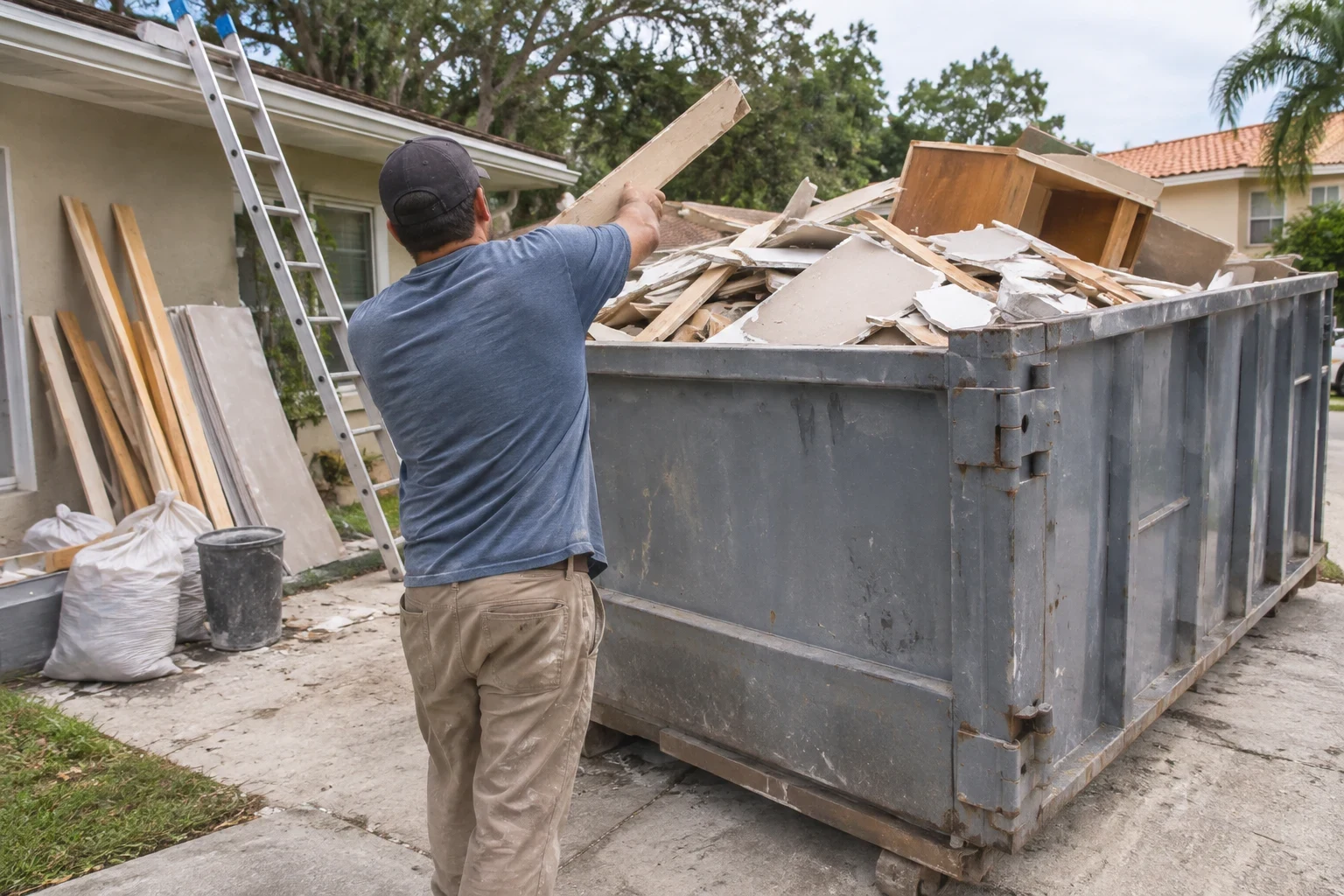
Debris removal built around what you are tearing out
Construction debris is not ordinary trash. A roof tear-off, a kitchen gut or a slab demo produces heavy, dense material: asphalt shingles, wet drywall, tile on mortar bed, broken concrete, nail-studded framing lumber. Each one weighs differently per cubic yard. That weight decides which container works and what the haul costs.
We match the dumpster to the debris, not just the square footage. Three squares of architectural shingles can hit a container's tonnage cap long before the box looks full. A cleanout of old cabinets and carpet fills by volume first. We ask what is coming out, then write down the yard size, the included weight and what happens if you go over, so the final bill matches the quote.
Contractors and roofers use this service for job sites that need a container swapped on a schedule. Homeowners use it for one remodel or a garage that has been collecting scrap for years. If you only need a container for general household cleanup, our roll off dumpster rental page covers that.
What the service includes
- A container sized to the material
- We recommend a yard size from the debris type and job scope. Heavy material like concrete or tile usually goes in a smaller box with a low fill line, because a full large container of masonry would exceed road weight limits.
- Written weight allowance
- Your quote states the tonnage included with the flat rate and the per-ton charge above it. You know the math before the first shingle goes in.
- Placement that protects the driveway
- We set the roll-off on boards under the rails and wheels to spread the load across concrete or pavers. We confirm the spot with you so it clears gates, overhead lines and tree limbs.
- Swap-outs on active job sites
- When a container fills, we pull it and drop an empty one in the same spot. Crews keep tearing off instead of stacking debris on the lawn.
- Haul away to the proper facility
- Mixed construction debris, clean concrete and yard waste often go to different facilities. We route each load where it is accepted.
Signs a regular trash can will not handle the job
You are stripping a roof
Shingles, felt underlayment and rotted decking come off fast and weigh a lot. One tear-off can produce several tons of debris in a single day.
Drywall and flooring are coming out
Gutting a bathroom or kitchen sends out drywall, tile, subfloor and old vanities. Curbside pickup will not take it, and pickup-truck runs eat a weekend.
There is concrete or masonry to break up
Removing a patio, pavers or block wall creates dense rubble. It needs a container rated for the weight and placed where the truck can lift it safely.
Debris is sitting in the rain
Piles left out through summer afternoon storms soak up water. Wet drywall and insulation get heavier and messier to load, so a covered or promptly hauled container saves weight and cleanup.
Your crew is waiting on cleanup
If workers stop to stack scrap or drive loads off site, a scheduled swap keeps the job site clear and the crew on task.
What moves the price of debris removal
Debris removal pricing comes down to weight, space and time. We spell out each factor in your written quote so you can plan the job, and if a change on your end will shift the cost, we tell you before it happens.
Material weight
Concrete, tile and wet shingles cost more to dispose of per yard than lumber or carpet. Disposal facilities charge by the ton, so dense debris drives the bill.
Yard size
Larger containers cost more to deliver and haul. Choosing the right size up front often avoids paying for a second box or an extra trip.
Rental length and swaps
The written terms include a set number of rental days. Extra days and each additional swap on a longer project are listed separately.
Mixed versus clean loads
Clean concrete or clean yard waste can sometimes go to a different facility than mixed construction debris. Keeping material separate can lower disposal cost.
Placement and permits
A container on private property usually needs no permit. Street placement may require one, and tight or soft access can affect how the delivery is handled.
How a debris removal job runs
- 1
A phone call about the job
You tell us the material, the rough quantity and where the container can sit. We ask about access, slope and anything that might be restricted, such as paint, tires or batteries.
- 2
Written quote before delivery
We put the yard size, rental days, included tonnage, overage rate and any swap charges in writing. Nothing gets added after the fact that was not listed up front.
- 3
Delivery and placement
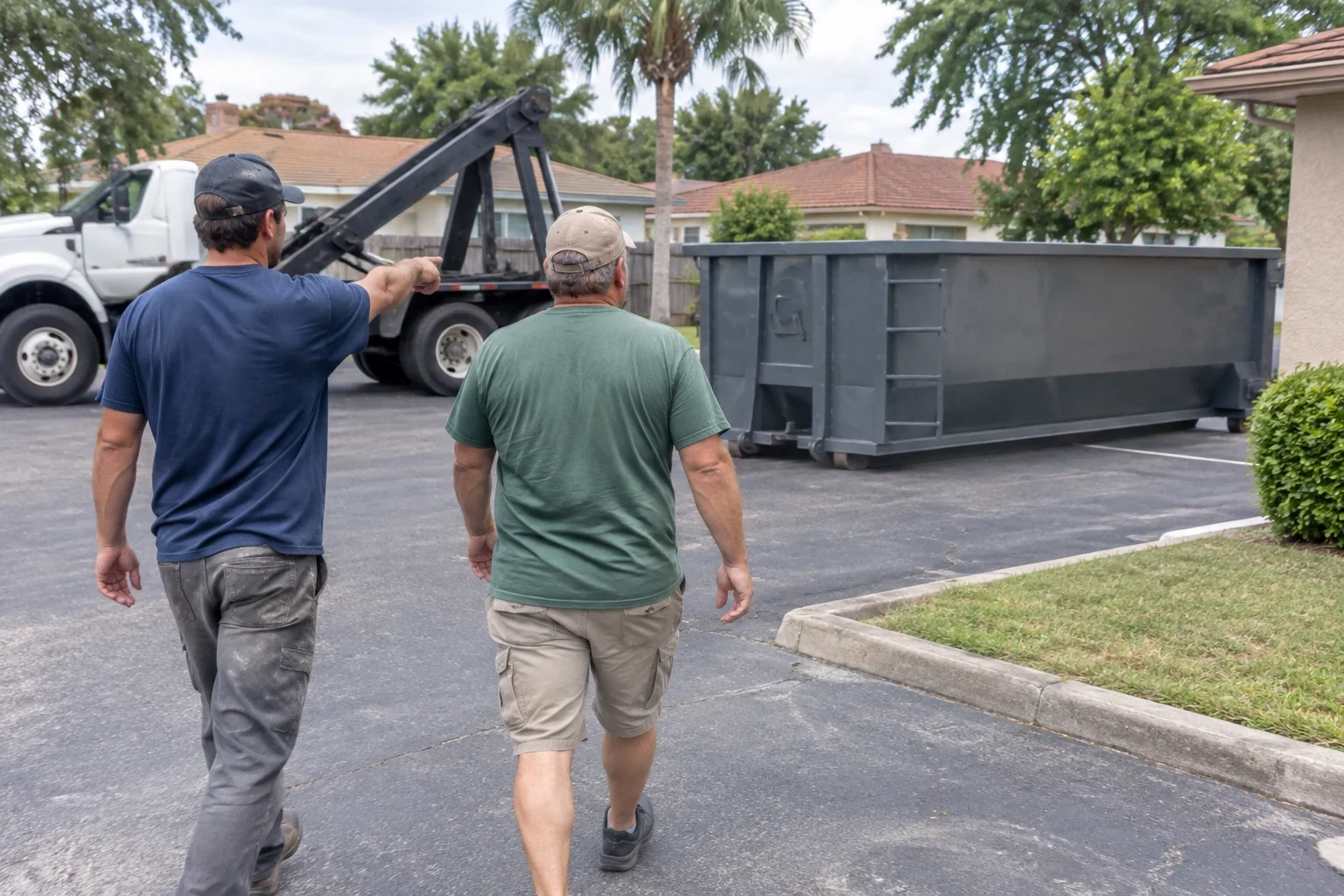
The driver backs the roll-off into the agreed spot on protective boards. If the container must go on the street, we tell you whether a city placement permit applies.
- 4
Loading and swaps
Load evenly and keep debris below the top rail so the tarp can close and the load can travel legally. Call when it is full and we schedule a pickup or a swap.
- 5
Final haul away
We pull the last container, take it to the scale and send a final bill that lines up with the terms we agreed on.
Construction debris removal questions
What can I put in a construction debris dumpster?
Shingles, drywall, lumber, flooring, cabinets, tile, concrete and most demolition scrap are fine. Paint, solvents, tires, batteries, appliances with refrigerant and asbestos-containing material cannot go in. If you are unsure about an item, ask on the call and we will note the answer in writing.
How do I know which size to get?
Tell us the material and the area you are removing, such as roof squares or square feet of flooring. We size the container by weight as well as volume. Heavy debris often goes in a smaller box so it stays under the legal hauling limit.
What happens if I go over the weight allowance?
Each container is weighed at the facility. Weight above the included tonnage is billed at the per-ton rate written on your quote. We can help you estimate tonnage beforehand so it does not catch you off guard.
Can you swap containers while my roofing crew works?
Yes. On multi-day tear-offs or remodels we pull the full roll-off and set an empty one in the same spot. Give us a heads-up when it is close to full so the swap fits your crew's schedule.
Will the dumpster damage my driveway?
We place boards under the container to spread its weight across the surface. Very heavy loads on older or thin concrete still carry some risk, so we talk through placement options before delivery.
Do you serve job sites outside Edgewater?
We work across the surrounding area, including New Smyrna Beach, Port Orange and Ponce Inlet. Delivery distance is one of the items we list in writing before the container goes out.
Get your debris container scheduled
Tell us what you are tearing out and where the container will sit. We will put the size, weight allowance and rental terms in writing before delivery.