ServicesFront Load Dumpster Service
Front Load Dumpster Service in Edgewater
We set a lidded front load container at your business and empty it on fixed days each week. Before anything is delivered, you get a written quote that lists the container size, pickup schedule and every part of the monthly charge, so the first invoice holds no surprises.
What front load service is and who it fits
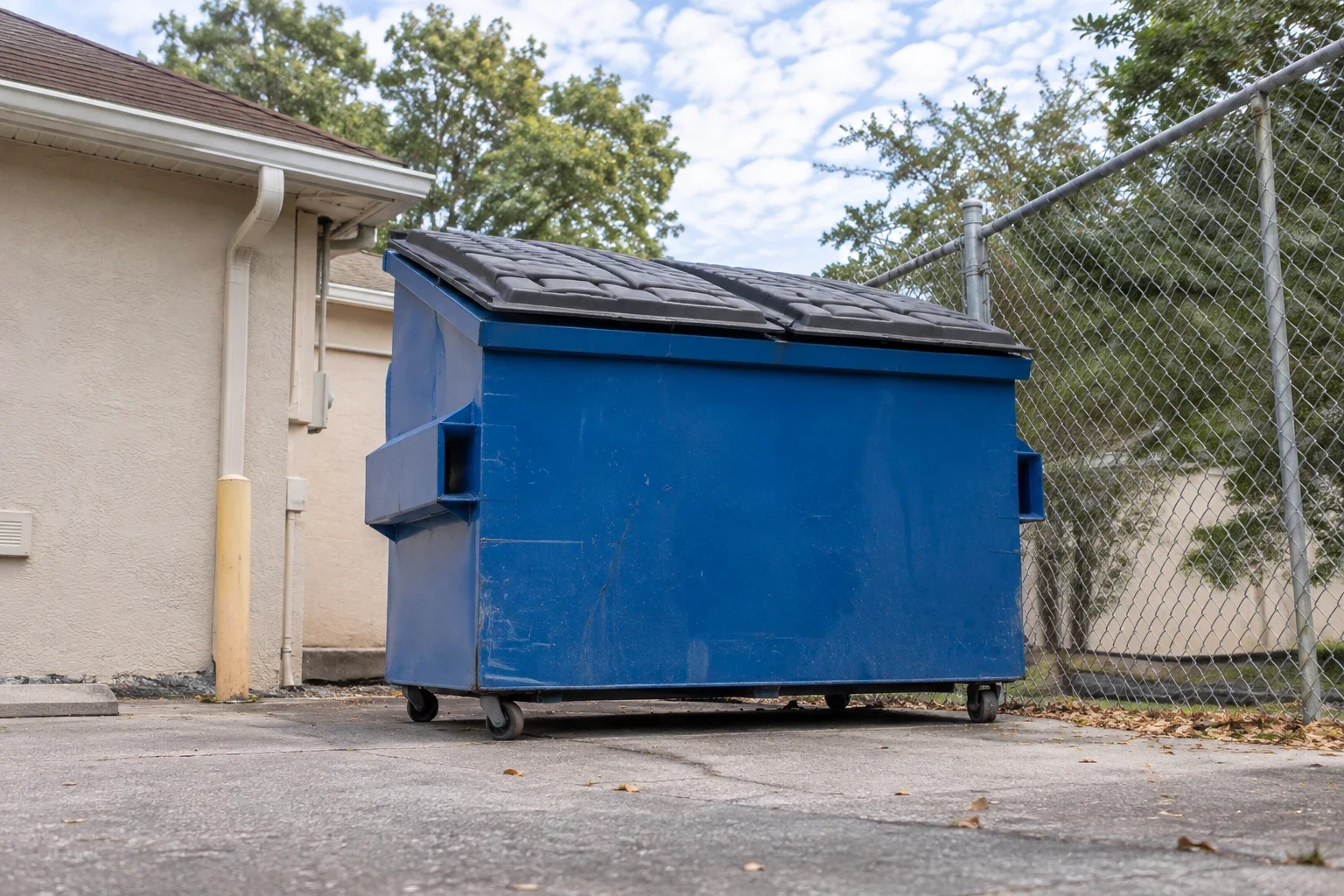
A front load dumpster is a steel container with hinged plastic lids and a pocket, called a sleeve, on each side. Common sizes run from about 2 to 8 cubic yards. Our truck slides its forks into those sleeves, lifts the container over the cab and tips it into the hopper. The container never leaves your lot. It stays in one spot and gets emptied on a set schedule.
It is the right setup for steady, ongoing waste: a restaurant's daily bags, a store's flattened boxes, an office building, a small shop that fills a can every few days. For a one-time cleanout or a remodel full of heavy debris, our roll-off dumpster rental fits better, because that container is sized for a single job and hauled away when the work is done.
Before service starts, we put the container size, pickup days and each line of the monthly charge in writing. You know what you are paying for and what would cost extra.
What your service includes
- A container sized to your volume
- We ask what you throw out in a normal week, how much is bagged versus loose cardboard, and how wet it is. Then we recommend a size and a pickup count together. A smaller container emptied twice a week often works better than a large one emptied once, especially with food waste.
- Delivery and placement
- We set the container on a hard, level surface where the truck can pull straight in. The forks need a clear approach, and the lift needs open space overhead, so low branches, power lines and awnings all factor into where it goes.
- Pickups on fixed days
- Your container is emptied on the same days each week. The driver sets it back in its spot and leaves the lids down.
- Size and schedule changes
- If your volume grows or drops with the season, we can swap the container or change the pickup count. Any change is written into your terms before it takes effect.
- Terms you can read
- Your written terms list the monthly charge, what it covers, and what would be billed separately, such as an extra pickup or an overloaded container.
Signs your business has outgrown its trash cans
Carts full by midweek
When rolling carts are packed days before pickup, bags end up stacked beside them. Loose bags tear open and draw birds, raccoons and complaints from neighbors.
Lids that will not close
An overfilled container is hard to lift cleanly, and debris spills when it tips. In summer rain, open lids also let water soak the load, adding weight and odor.
Cardboard taking over
Unbroken boxes fill a container with air. If deliveries leave a pile of cardboard every week, you need more capacity or more frequent pickup.
Smell and flies by the back door
Food scraps break down fast in warm weather. More frequent pickup usually fixes this better than a bigger container that sits longer.
Staff hauling trash themselves
If employees are loading bags into their own vehicles or driving to a drop-off site, you are paying labor hours for a job a scheduled pickup handles.
What sets your monthly price
Front load service is a recurring monthly charge, not a per-load fee like a roll-off. The price comes down to how much container capacity we empty each month and what it takes to reach it. Each of these is spelled out in writing before service starts, so you can see where every part of the charge comes from.
Container size
A larger container holds more per pickup and costs more to empty. The right size is the smallest one that does not overflow between pickups.
Pickup frequency
Each pickup is a truck stop, so twice a week costs more than once. For food waste or heavy cardboard volume, the extra pickup is often worth it.
What goes in the container
Wet food waste and dense material weigh more per yard than dry office trash. Heavy debris such as concrete, tile or roofing belongs in a roll-off, not a front load container.
Access and placement
A container inside a gated enclosure, at the back of a tight lot or behind a narrow drive takes more time per stop than one set at an open curbside pad.
Optional extras
Lock bars, extra pickups and overloaded containers are billed separately. Your written terms name each one so you can decide in advance.
How service starts and runs
- 1
A phone call about your waste
Tell us your type of business, what you throw out and how you handle it now. We ask where a container could sit and how a truck would reach it.
- 2
Site check and written quote
We confirm the surface, the approach and the overhead clearance. You then get the container size, pickup days, the monthly charge and the conditions that would add a fee, all in writing.
- 3
Delivery
The truck sets the container with its sleeves facing the approach, so every pickup lines up the same way. We check that the lids open and close freely.
- 4
Route days
On the days set in your terms, the truck pulls up, lifts the container and tips it into the hopper. Those mornings, the front of the container and its sleeves need to be free of parked cars, pallets and delivery carts. When a driver finds the container boxed in, we reach out to you so it can be cleared before the truck comes back.
- 5
Adjusting as you go
After a few weeks you will know whether the container fills early or sits half empty. We change the size or frequency to match, and update your terms in writing.
Front load dumpster questions
What size front load dumpster does my business need?
It depends on how much you throw out between pickups, not just in total. A small office may fill a 2-yard container once a week, while a busy restaurant may need a larger one emptied more often. We work through your weekly volume on the phone and recommend a size and schedule together.
What can't go in a front load container?
Paint, oil, liquids, batteries, tires and hazardous chemicals stay out. Heavy construction debris such as concrete, brick and shingles is too dense for a front load truck and should go in a roll-off instead. If you are unsure about a material, ask before it goes in.
Do I need a concrete pad?
A concrete pad is the best surface. A loaded front load truck is heavy, and the front wheels and forks can crack or rut asphalt over time. Some properties also require a screening enclosure, so check with your property manager or the city before we set the spot.
What happens if the container is overfilled or blocked?
If trash is piled above the lids, it can fall when the container is tipped, and the overload may be billed as listed in your terms. If a car or pallet blocks the container, the driver may not be able to empty it that day. We tell you either way so you can fix it before the next pickup.
Do you serve businesses outside Edgewater?
Yes. We also run front load routes for businesses in New Smyrna Beach, Port Orange, South Daytona and other nearby towns. Our Service Areas page lists the full area, or ask when you call.
Set up regular pickup for your business
Tell us what you throw out in a week and where a container could sit. We will put the size, schedule and monthly charge in writing so you can start service knowing the numbers.